Exploring the Canadian and international research behind belonging, immersive gaming experiences, collaborative fantasy adventures, and neuroaffirming mental health programming.
What Does a Good Quality of Life Look Like for a Neurodivergent Child?
Every parent wants their child to experience a fulfilling life.
One that includes happiness, emotional well-being, meaningful relationships, opportunities to pursue their interests, and the freedom to be themselves.
Yet many families of neurodivergent children and youth face a challenging question: How do we support these experiences when traditional environments and interventions don’t always meet our children’s needs?
A child may understand how to initiate a conversation but still experience loneliness. They may know strategies for managing emotions but find it difficult to use them when overwhelmed. They may want friendships but struggle to find environments where they feel genuinely understood.
These experiences remind us that mental wellness is about much more than acquiring individual skills.
It involves emotional well-being, authentic communication, self-understanding, autonomy, meaningful relationships, and a sense of belonging.
At Mind 2 Heart Connections, this broader understanding of mental health guides how we develop programs for neurodivergent children and youth.
Our approach brings together clinical experience, research-informed practice, neuroaffirming principles, and engaging experiences that allow children to explore mental health concepts through creativity, collaboration, and playfulness.
Increasingly, research is helping us understand why these elements matter.
1. Why Belonging Matters to Mental Health
One of the most compelling findings comes from Canadian research examining disability, discrimination, belonging, and life satisfaction.
Daley et al. (2018) analyzed data from 11,997 Canadian adolescents, including 2,193 youth with disabilities.
The researchers found that disability-related discrimination was associated with lower life satisfaction. However, a strong sense of community belonging appeared to buffer this negative relationship.
Among adolescents experiencing discrimination who reported strong community belonging, the researchers did not find the same statistically significant reduction in life satisfaction.
Because the study was observational, it cannot establish that belonging directly causes better mental health. It also involved youth with disabilities broadly rather than neurodivergent youth specifically.
Nevertheless, the findings offer an important perspective.
A child can participate in a group without feeling connected.
They can learn conversational strategies without developing meaningful friendships.
They can be included in activities while still feeling that acceptance depends on hiding important parts of who they are.
Mental wellness requires us to consider not only the individual child’s development, but also the environments, relationships, and communities surrounding them.
Belonging isn’t something children should have to earn by learning to fit in. It’s something we have a responsibility to create.
For parents seeking to improve their child’s quality of life, this distinction matters.
2. Rethinking Social Communication Through a Neuroaffirming Lens
Neurodivergent children and youth may experience emotions, relationships, sensory environments, and communication differently from their peers.
These differences do not necessarily reflect a lack of interest in relationships or an inability to connect.
Sometimes the challenge lies in the expectations of the environment or differences in communication styles.
The double empathy problem challenges the assumption that communication difficulties experienced by autistic people arise exclusively from individual deficits.
Crompton et al. (2020) examined information transfer among 72 autistic and non-autistic adults.
They found that autistic adults communicated information effectively with other autistic adults, while mixed autistic and non-autistic groups experienced greater difficulties with information transfer.
These findings suggest that misunderstandings can arise between people whose communication styles and experiences differ.
Although this was an adult study rather than an evaluation of children’s mental health treatment, it provides an important foundation for considering how we design neuroaffirming environments.
Instead of focusing exclusively on adapting children to existing social expectations, we can also work to create environments that respect their communication preferences, interests, sensory needs, and autonomy.
This does not mean that developing communication skills is unimportant.
It means recognizing that authentic communication, reciprocal understanding, emotional safety, and meaningful relationships are important outcomes in their own right.
3. What Do Neurodivergent Youth and Their Families Want?
Research into mental health and social programming is most useful when we consider the experiences of the people those programs are intended to support.
In a Canadian study, MacCormack (2017) interviewed 12 autistic youth and 15 parents about their experiences and expectations of social competence programs.
Youth expressed a preference for activities that matched their interests and developmental stage.
Parents reported frustration with barriers to accessing services and programs that did not adequately meet their children’s needs.
The findings highlight an important consideration: a program can be well-intentioned and clinically informed without necessarily being engaging or meaningful for every participant.
For some children, direct conversations about emotional experiences may be valuable.
For others, shared interests, interactive experiences, and collaborative activities may create a more accessible starting point.
This is where immersive gaming and fantasy-based role-playing offer interesting possibilities.
4. Immersive Gaming and Fantasy Adventures as Pathways to Mental Wellness
Imagine a group of young people entering a fantasy world together.
They create characters, make decisions, navigate uncertainty, overcome challenges, and collaboratively shape an unfolding adventure.
One participant may enjoy strategy and planning. Another may contribute imagination and storytelling. Another may discover that they are particularly good at noticing details, developing solutions, or supporting the group.
Within thoughtfully facilitated programming, these experiences can create opportunities to explore emotional responses, communicate preferences, navigate disagreements, and develop relationships.
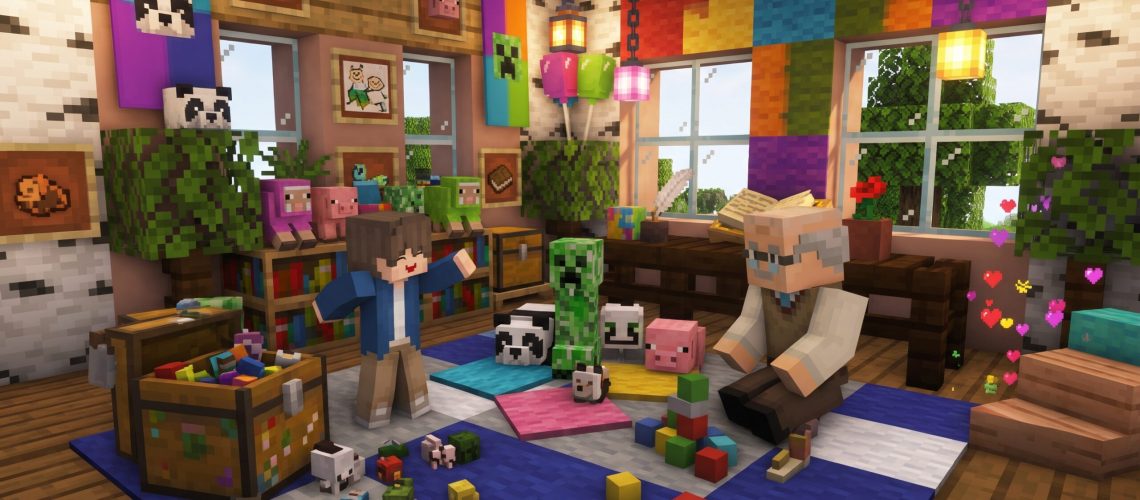
Now imagine a collaborative Minecraft world.
Participants may build a community, develop shared projects, respond to unexpected challenges, and negotiate decisions that matter to them.
Communication has a purpose within the experience.
Participants are not simply being asked to demonstrate a predefined behaviour. They have something meaningful to create or accomplish together.
The therapeutic opportunity is not inherent in the game alone.
It comes from the relationship between the participant, the activity, the facilitator, and the mental health learning intentionally integrated into the experience.
This is a particularly important distinction when discussing therapeutic gaming.
The value of a facilitated mental health program should not be confused with the cost or experience of participating in a recreational game.
5. Canadian Research on Minecraft and Collaborative Engagement
MacCormack and Freeman (2019) explored the use of Minecraft in a facilitated program involving four autistic boys aged 11–13.
Participants engaged in structured and unstructured Minecraft activities with adult support and peer involvement over eight sessions.
The researchers observed sustained communication initiations during structured play, along with improvements in aspects of collaborative interaction during later sessions.
The results were encouraging, although the sample was small and the program incorporated multiple supports, making it difficult to isolate Minecraft’s specific contribution.
Nevertheless, the study demonstrated how a familiar digital environment could be used to support purposeful, facilitated collaboration.
For mental health providers, this raises an important possibility: engaging children through their interests may provide opportunities to explore communication and relationships in ways that are meaningful to them.
Understanding How Gaming-Based Programs May Work
A 2025 Australian study by Black et al. used a realist evaluation to explore how a Minecraft-based support program was experienced by autistic youth, caregivers, and facilitators.
The study included four autistic youth, six caregivers, and two facilitators.
The researchers identified several potentially important elements:
- Building on the young person’s existing interests and strengths.
- Allowing participants to take an expert role.
- Sharing choice and decision-making between facilitators and youth.
- Creating meaningful reasons to communicate and collaborate.
- Supporting opportunities for social connection, independence, and emotional regulation.
One particularly interesting finding concerned the importance of recognizing participants’ expertise.
Instead of positioning young people solely as recipients of instruction, facilitators created opportunities for them to contribute knowledge, make decisions, and influence activities.
For neurodivergent children who may frequently experience environments focused on their difficulties, the opportunity to participate through their strengths can be especially meaningful.
The study was exploratory, and the reported experiences do not establish clinical effectiveness. However, it provides a useful framework for understanding why some interest-based approaches may be engaging.
The research suggests that meaningful engagement depends on more than technology. Autonomy, individual strengths, relationships, and facilitation all matter.
6. Canadian Research on Fantasy Role-Playing and Social Connection
Collaborative fantasy role-playing offers a different but complementary opportunity.
In tabletop role-playing adventures, participants create characters, develop stories, make decisions, and respond together to imagined situations.
These experiences can provide opportunities for emotional exploration and self-expression.
For example, a participant might consider how their character responds to fear, rejection, conflict, or uncertainty.
Discussing the experiences of a fictional character can sometimes feel more comfortable than beginning with direct questions about personal emotions.
The shared adventure also creates opportunities for collaboration, decision-making, and communication.
Research From Trent University
Smith and Agostino (2026) examined the experiences of eight autistic adolescents, aged 14–18, participating in a neuroaffirming Dungeons & Dragons program in the Greater Toronto Area.
The researchers explored participants’ experiences of social engagement and connection through collaborative fantasy role-playing.
Their qualitative findings describe opportunities for enjoyment, social connection, self-expression, and agency.
The program emphasized youth choice, shared interests, respectful relationships, and meaningful participation.
Importantly, the researchers examined how the participants experienced the program, rather than defining success solely through the demonstration of prescribed social behaviours.
The study was small, and its findings should not be interpreted as proof of long-term therapeutic effectiveness.
However, the research offers promising support for the idea that collaborative fantasy adventures can create meaningful opportunities for social connection when developed within a neuroaffirming framework.
It also reinforces the importance of listening to autistic young people about what makes participation meaningful to them.
7. Bringing Mental Health Learning Into the Worlds Children Love
At Mind 2 Heart Connections, the research connects with work we have already been developing through our M2H Day Program.
Our team has created an in-depth, neuroaffirming mental health curriculum exploring:
- Feelings and emotions
- Self-regulation and understanding stress responses
- Grief, loss, and change
- Friendship and relationship building
- Authentic social communication
- Self-advocacy and personal boundaries
- Identity, strengths, and understanding oneself
- Executive functioning and everyday coping strategies
These topics are not isolated areas of development.
They influence how children experience themselves, communicate their needs, navigate relationships, and participate in everyday life.
Our curriculum uses experiential, interactive activities to explore mental health concepts in ways that are accessible, engaging, and relevant.
We’re now taking selected activities from this curriculum and thoughtfully adapting them into specially designed Minecraft experiences.
An Example: Understanding the Brain and Nervous System
Within our day program, children explore how their brains and bodies respond to stress, uncertainty, emotions, and feelings of safety.
Using accessible nervous-system education, emotional-regulation concepts, and selected polyvagal-informed activities, we help children recognize their experiences and explore strategies that support their well-being.
We’re now developing ways to represent aspects of this learning within Minecraft.
Imagine entering a digital world where different environments represent emotional experiences.
A participant might encounter a character who feels overwhelmed, identify possible stress responses, or explore what helps that character feel safer and more connected.
Other activities might invite participants to collaboratively design environments that support different sensory or emotional needs.
These experiences create opportunities to explore mental health concepts through interaction, reflection, and shared problem-solving.
They also allow children to approach learning through their interests and strengths.
The examples described here reflect activities we are developing, not interventions whose outcomes have already been formally evaluated.
We aren’t simply adding a mental health conversation to a game. We’re intentionally adapting our mental health curriculum into interactive experiences within the game itself.
That is an important distinction in our approach.
The technology is not the mental health service by itself.
It is one way of bringing clinically informed mental health learning to life.
8. Why Research, Clinical Experience, Neuroaffirming Practice, and Playfulness All Matter
Effective mental health programming involves more than selecting an engaging activity.
At Mind 2 Heart Connections, our approach integrates four essential elements.
Clinical experience informs our understanding of children’s emotional, developmental, and relational needs.
Research-informed practice helps guide program development and encourages us to examine what works, while recognizing the limitations of emerging evidence.
Neuroaffirming principles emphasize individual strengths, autonomy, authentic communication, sensory needs, and respect for different ways of experiencing the world.
Playfulness provides opportunities for imagination, curiosity, experimentation, collaboration, and shared enjoyment.
These elements work together.
A fantasy adventure may create opportunities to explore courage, uncertainty, or relationships.
A Minecraft experience may help make emotional-regulation concepts more concrete and accessible.
An immersive virtual reality activity may invite participants to explore collaboration and communication through interactive experiences.
In each case, the intention is to create meaningful opportunities for mental health learning while respecting the individual needs of participants.
Mental wellness is our foundation. Fantasy, adventure, and immersive gaming are some of the ways we bring that learning to life.
9. Continuing Mental Health Learning Beyond Structured Programs
One of the challenges in mental health programming is supporting children and youth in applying what they have learned beyond a structured session.
A child may understand how to communicate a boundary within a supportive group but find it more difficult when faced with a disagreement.
They may recognize their emotional responses during a facilitated activity but need further opportunities to explore those experiences in everyday interactions.
This is part of the thinking behind the Minecraft Community World being developed at Mind 2 Heart Connections.
The world is designed for children and youth who have previously participated in our mental health programs.
Rather than offering unrestricted recreational gaming as a separate service, our intention is to create continuity through a familiar digital environment connected to their previous mental health learning.
The world will incorporate scheduled coaching by members of our mental health team, curriculum-based activities, and opportunities for extended facilitated programs.
Participants will have opportunities to connect with peers, collaborate, revisit important concepts, and continue exploring communication, emotional awareness, and self-advocacy.
The goal is to support meaningful application of learning within a community where participants have already developed familiarity with our approach.
The community-world model is currently in development. Its supervision arrangements, delivery structure, and outcomes will require ongoing review and evaluation.
10. What Does the Research Tell Us—and What Do We Still Need to Learn?
Research examining Minecraft and tabletop fantasy role-playing in therapeutic and supportive settings is growing.
The findings so far offer encouraging insights into engagement, communication, autonomy, collaboration, and belonging.
However, many studies have small samples, use exploratory or qualitative designs, and do not establish long-term treatment effects.
It is important to distinguish between research demonstrating the association between belonging and well-being, studies exploring engagement through gaming, and research directly evaluating specific mental health interventions.
Our own curriculum-integrated Minecraft approach has not yet been formally evaluated as a distinct clinical model.
We view that as an opportunity to continue learning.
Listening to children and youth, understanding family experiences, evaluating engagement, and examining meaningful mental health outcomes will all be important as these programs evolve.
The research informs our direction, but it does not replace individualized clinical judgment or the voices of the young people participating.
11. Bringing These Experiences to Families
Fantasy Adventures — Launching Now
Our collaborative fantasy role-playing programs use imaginative adventures, including Dungeons & Dragons, as opportunities for mental health learning, emotional exploration, communication, and connection.
Virtual and in-person Friday evening groups are launching now.
Guided Minecraft Mental Wellness Programs — January 2027
We’re developing curriculum-based Minecraft experiences that integrate emotional learning, self-understanding, self-advocacy, and relationship building into interactive digital environments.
Minecraft Community World — Spring 2027
Our planned coached community world will provide opportunities for children and youth who have participated in our programs to revisit their learning, maintain peer connections, and participate in ongoing mental health activities.
12. A Better Quality of Life Begins With Meaningful Connection
For parents, the hope is often simple, even when the journey is complicated.
They want their children to experience happiness, confidence, meaningful relationships, and opportunities to feel accepted.
They want their children to understand themselves, communicate their needs, discover their strengths, and have a future that feels full of possibility.
These hopes are central to our work at Mind 2 Heart Connections.
We believe mental health support should recognize the whole child—their emotions, identity, relationships, interests, experiences, and aspirations.
We also believe that the environments we create matter.
Because supporting mental wellness isn’t simply about helping children adapt to the world around them.
It’s about creating opportunities for children and youth to experience a world where they genuinely belong.
References
Black, M. H., Lilford, A., Nguyen, V., Walker, E., Wee, H. H., Falkmer, O., & McGarry, S. (2025). Gaming in the intervention and support process: A realist evaluation of a gaming-based programme. Autism, 29(7), 1688–1699. https://doi.org/10.1177/13623613251320542
Crompton, C. J., Ropar, D., Evans-Williams, C. V. M., Flynn, E. G., & Fletcher-Watson, S. (2020). Autistic peer-to-peer information transfer is highly effective. Autism, 24(7), 1704–1712. https://doi.org/10.1177/1362361320919286
Daley, A., Phipps, S., & Branscombe, N. R. (2018). The social complexities of disability: Discrimination, belonging and life satisfaction among Canadian youth. SSM – Population Health, 5, 55–63. https://doi.org/10.1016/j.ssmph.2018.05.003
MacCormack, J. W. H. (2017). What youths with autism spectrum disorder and their parents want from social competence programs. Exceptionality Education International, 27(1), 116–146. https://doi.org/10.5206/eei.v27i1.7749
MacCormack, J. W. H., & Freeman, J. (2019). Part 2: The virtual environment social program for youths with autism spectrum disorder. International Journal of Play Therapy, 28(4), 218–237. https://doi.org/10.1037/pla0000093
Smith, J. D. E., & Agostino, A. (2026). Fostering social connectedness: Autistic adolescent’s experiences of a Dungeons & Dragons social program. Research in Neurodiversity, 2, Article 100041. https://doi.org/10.1016/j.rin.2026.100041
